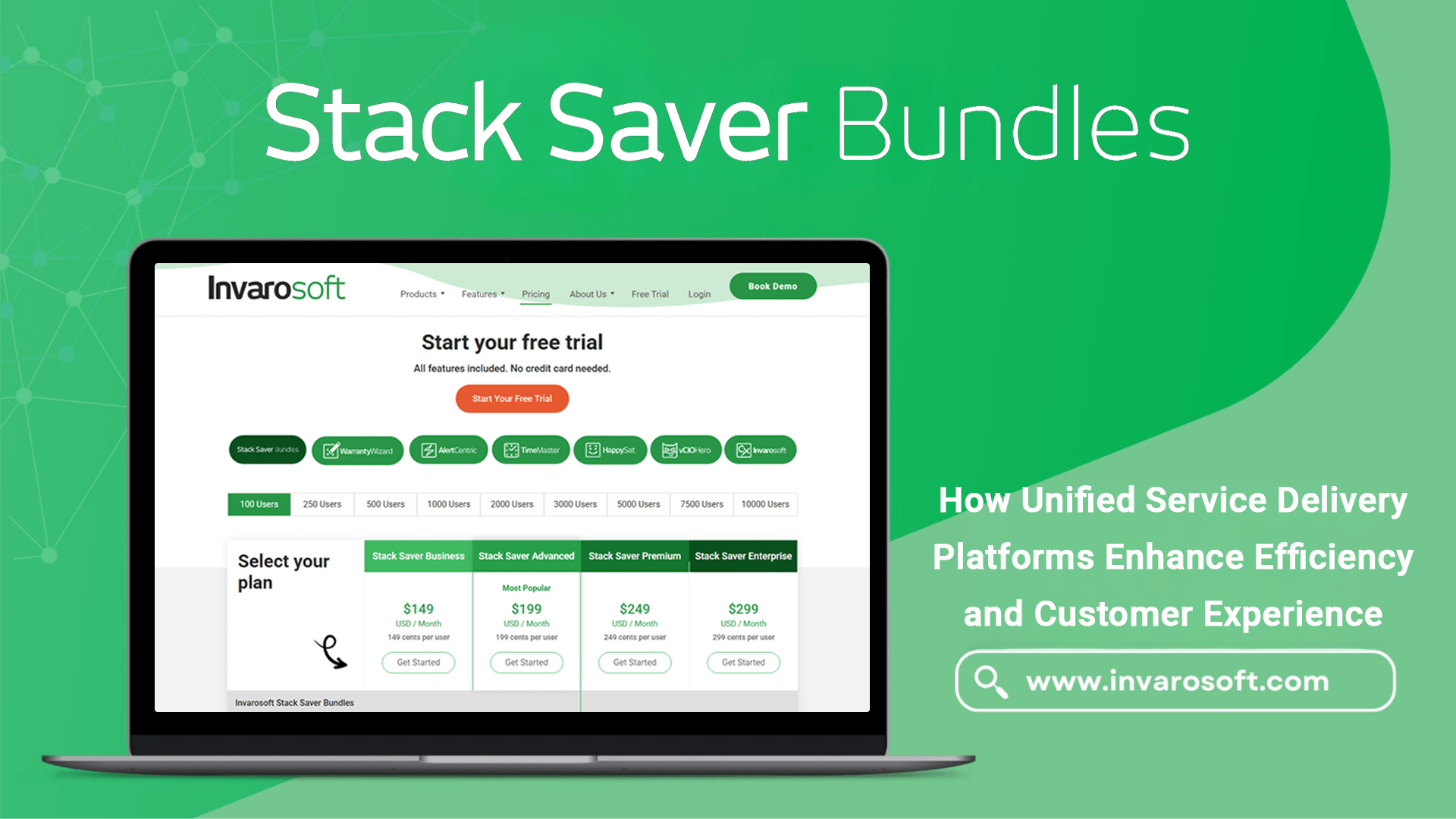
Unified service delivery platforms integrate various processes and systems into a single platform. Organisations can eliminate inefficiencies, enhance collaboration, and provide a seamless experience for clients and employees alike.
Adopting a unified platform allows businesses to centralise data, automate workflows, and deliver services more consistently.
Whether it’s handling customer requests, managing projects, or tracking performance, the platform becomes the backbone of efficient operations. Learn more below.
A unified service delivery platform is a system that combines multiple business functions into a single platform. It centralises company processes and data to ensure all departments have access to real-time information. Unified service delivery helps reduce workflow steps and optimise decision-making.
Unified service delivery platforms boost efficiency and customer service by consolidating processes, automating workflows, live insight tracking, personalising engagement and providing real-time updates.
A unified service delivery platform consolidates business processes such as ticketing, billing, and security management to minimise workflows and streamline communication between departments. It helps teams collaborate and speed up project completion, ensuring client requests are addressed promptly.
Automation is a cornerstone of unified service delivery platforms. Tasks such as routing tickets, updating records, or sending notifications can be handled automatically. It saves time but also ensures consistency across the organisation. Employees can focus on higher-value work while routine operations run reliably in the background.
Having access to real-time data empowers managers to make informed decisions quickly. Analytics can reveal trends, highlight inefficiencies, and track customer satisfaction scores. By understanding where improvements are needed, organisations can proactively address challenges before they escalate. This predictive approach improves overall performance and ensures resources are used efficiently.
One of the significant advantages of a unified platform is the ability to personalise customer interactions. By storing customer information in one system, businesses can tailor communications and services to individual needs. Personalised engagement demonstrates attentiveness and builds trust, enhancing the overall experience.
Customers appreciate transparency. A unified platform enables businesses to provide real-time updates on service requests or project milestones. Clients can track progress themselves or receive automatic notifications, which reduces uncertainty and enhances confidence in the service provider.
Understanding the main features of a service delivery platform helps clarify its value. Most platforms include:
Traditional siloed systems often lead to fragmented communication, repeated data entry, and delayed response times. In contrast, a unified platform consolidates these processes into a single interface. Teams can collaborate more effectively, share insights seamlessly, and maintain a consistent approach across all touchpoints.
The result is fewer errors, improved service consistency, and a more coordinated operation that benefits both employees and customers.
Adopting a unified service delivery tool typically involves planning. Here’s what the installation includes:
Invarasoft’s Unified MSP software is designed for Managed Service Providers (MSPs) to combine IT processes, reduce workflows and improve efficiency. It includes asset management, scheduling, auditing, ticketing, reporting and roadmapping solutions.
Our unified approach combines these software programs to help you work faster, save money and deliver better results to your clients.
Are you ready to improve your MSP processes? Explore our Unified MSP Software and book a demo to learn how it can improve your workflow efficiency and service delivery.